About me
At Ecreo, I work as an Umbraco Architect and Developer, spending most of my time around Umbraco, .NET, and web development. The work I enjoy most is the kind that turns something heavy into something lighter, simpler, and more useful.
I build useful things for the web, mostly around Umbraco and .NET, and I’m happiest when I can make work simpler for other people.

What I Build
Useful things for the web have been the common thread for a long time. Most of them happen to live around Umbraco and .NET these days, but the motivation is usually the same: make the work easier for someone else.
How I Ended Up Here
My way into development was never especially narrow. Long before this became professional work, I was already messing around with BASIC, Perl, and later PHP, mostly because I wanted to see what I could make happen.
Around the turn of the millennium, everybody seemed to be building their own CMS, or at least their own slightly questionable attempt at one, and I was no different. I tried all sorts of systems, some well known and some less so, before platforms like WordPress, Dynamicweb, and Zitaman became part of my professional work.
That broader start still shapes how I think. Design, frontend work, CMS work, client projects, and a lot of trial and error all came before any clear specialization, which is probably why I still care as much about editor experience and awkward workflows as I do about code.
Why Umbraco Stuck
When I joined Ecreo in 2013, the original plan was not really to go all in on Umbraco. I came in with much more Dynamicweb and frontend baggage than classic .NET experience, and for a while Umbraco felt more like something that had happened to me than something I had chosen.
Even so, it did not take long before it started to click. Underneath the Windows friction, yellow screens, and my initial hesitation around the .NET side, it felt like the right balance of flexibility, developer friendliness, editor friendliness, and a genuinely solid product.
Timing mattered too. I found the Umbraco community at a point where it suited me perfectly. The AngularJS backoffice had just made extensions much more accessible to developers coming from outside the traditional .NET path, and that lowered the barrier in exactly the right way for me.
Community, Writing, and Sharing
Local meetups made the whole thing feel real, and my first Codegarden was a proper eye-opener. Meeting people like Niels Hartvig, seeing how much energy there was around the product, and getting a closer look at the community side changed something for me. That was where sharing started to feel natural.
Writing for 24 Days in Umbraco and Skrift, experimenting with packages, spending time on the forum, and testing ideas in public all grew out of that period. Some of it came from curiosity, some of it came from customer work, and some of it came from wanting to challenge my own understanding by putting it where other people could poke holes in it.
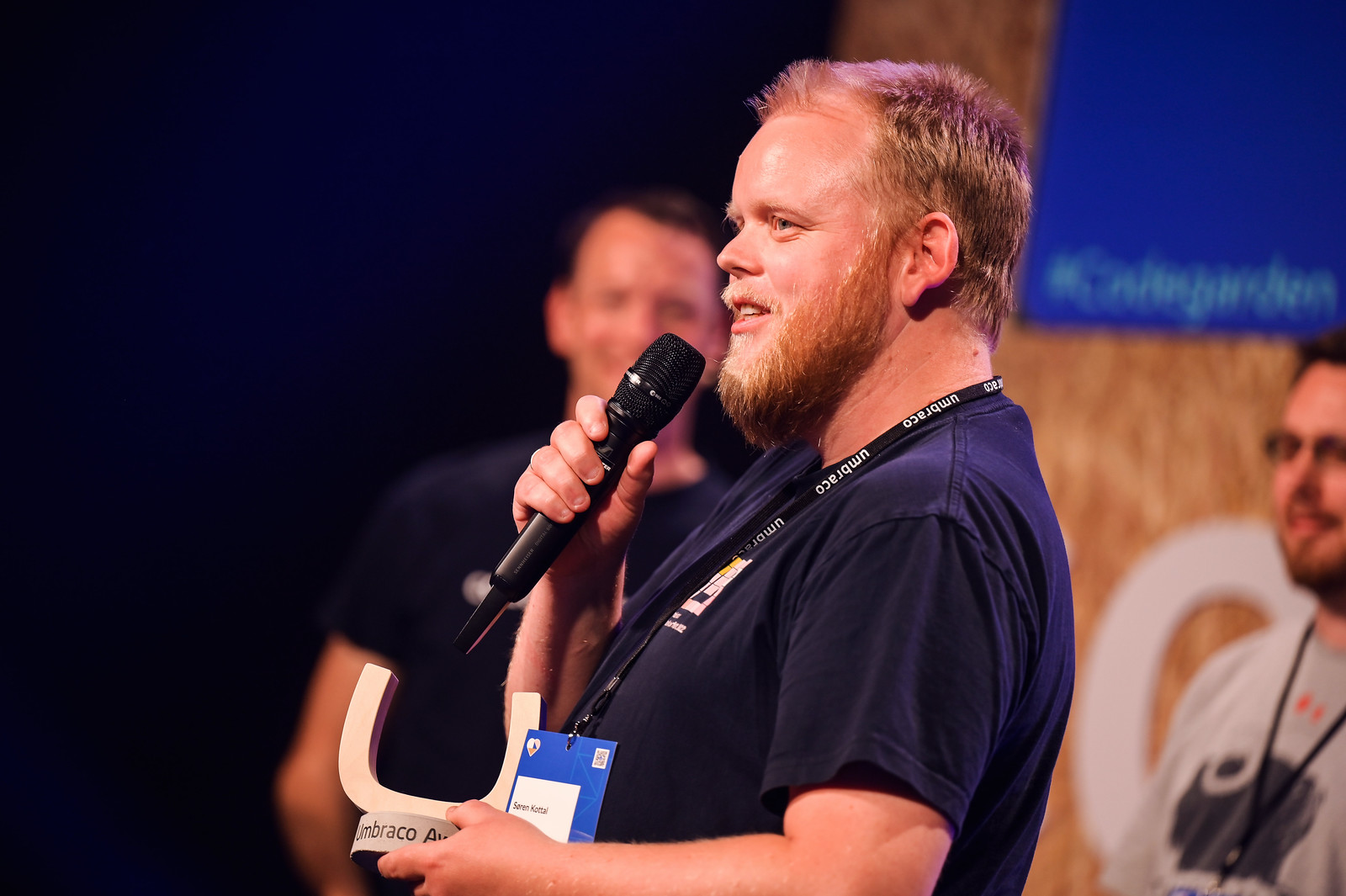
Over time, that work led to becoming an Umbraco MVP, which was something I had consciously wanted to work towards rather than something that just happened by accident. It also led to some of my packages becoming more visible. Projects like Matryoshka and Impersonator ended up being recognized by Umbraco itself, which still means a lot to me.
Projects and Packages
A few of the things I am most associated with are Full Text Search, Matryoshka, Impersonator, and Doc Type Grid Editor.
Doc Type Grid Editor is a slightly different story than the others. I did not create it from scratch, but I took it over and helped carry it forward, including the port to Umbraco 8, after Matt Brailsford and Lee Kelleher had moved on. That part matters to me too. Building new things is one kind of contribution, but stewardship matters just as much.
Most side projects and packages start in roughly the same place: an itch I need to scratch, a customer problem, a workflow that feels too heavy, or a passing thought that makes me wonder whether something could be done in a smarter way. Irritation and curiosity are both pretty reliable fuel.
Making Things Simpler
Removing complexity is probably the closest thing I have to a theme. If something can be made easier, faster, or disappear entirely as work, I am interested. The best solutions are often the ones that make everyday life lighter for both developers and editors.
That is also how AI fits into what I do now. Real web work matters more to me than AI for its own sake, but AI is a very useful enabler. It makes it possible to test ideas faster, reduce friction, and build more than I otherwise could. That is the part I find interesting.
I write and share because it helps me think more clearly, make things more useful for other people, and give something back to a community I have learned a lot from.
Away From Work
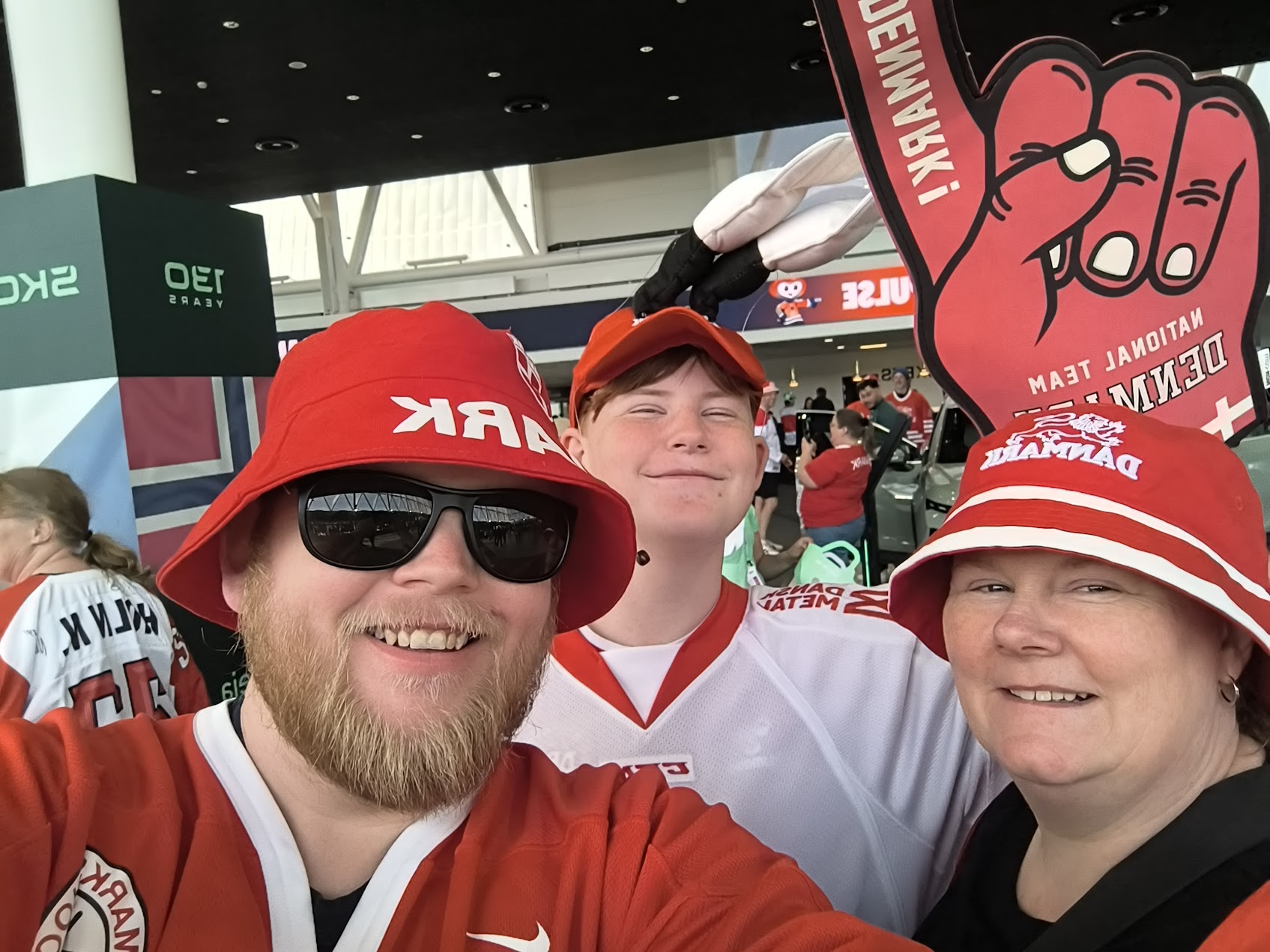
Away from work, family takes up most of the good space. I met my wife, Lene, through ice hockey, and we have a son, Maximilian. For a while, hockey looked like it might become his thing too, but lately darts seems to be making a stronger case. He certainly has a much easier time hitting 180 than I do.
As for me, hockey has stayed with me in several forms over the years. I have been a fan, a player, and a coach, and I suspect some of that still shows up in how I work: structure, teamwork, repetition, and the appeal of making things run a little better over time.
Read More
If you want to follow what I am building, the best next stop is the blog. That is where most of the experiments, lessons, tools, and ideas tend to end up.